


Those things about cell culture
The matter of raising cells, seemingly simple, but often for various reasons, our precious experimental cells are repeatedly damaged or died, today we will combine years of practical experience and cell culture guides, to tell you about those small but important details encountered in the cell culture process that you may overlook.
01
A source of nutrients for cells
For most tumor cells, the nutritional formula is generally as follows: 90% synthetic medium (DMEM, RPMI1640, MEM, etc.) and 10% fetal bovine serum (FBS); To prevent contamination, you can add 1% double antibody!
Frequently Asked Questions:
Q: Is the cell culture medium formulation the same for different cells? How do I know that?
A: The culture medium for different cells is different. For different cell lines, there will be detailed information, including growth status diagrams, type of medium, etc. For example, human breast cancer cells MCF-7 cells are generally 1640, human lung cancer cells A549 can use DMEM medium.
Q: Why is the medium generally reddish?
A: Because phenol red is added to the medium to display the color, indicating a pH range of 6-8, the color will change from yellow to purple red. This is so that we can more intuitively observe the changes of the culture medium, such as yellow, it means acidic, alkaline will show purple. Generally speaking, after the cells absorb nutrients, after turning yellow, it means that we need to change the medium! So it's important to keep an eye on it!
Q: If the cells grow slowly, can I increase the serum ratio?
A: Yes!
02
The environment in which the cells live
A comfortable and sterile environment is an important foundation for a healthy life for cells. The figure below shows the vessels for culturing cells, including flasks, dishes and plates of various shapes, specifications, and uses. Finally, we lived in a constant temperature incubator at 37°C and 5% CO2.
Frequently Asked Questions:
Q: Cell culture plates have different specifications, how to choose correctly?
A: According to different specifications of cell culture dish/plate capacity and use, such as flow cytometry generally uses 6 wells, climbing tablets generally use 24 wells, MTT generally uses 96 wells, etc.
Q: What is the difference between a cell culture dish and a flask?
A: As far as the cell culture state is concerned, there is not much difference between the flask and the dish, mainly in the safety factor (flask > dish) and the number of cells cultured (large flask > dish). However, the cost of culture flasks will be relatively high, so there are no special requirements, and the petri dish can generally be selected.
Introduction to KIRGEN cell culture flasks
Cell culture flasks
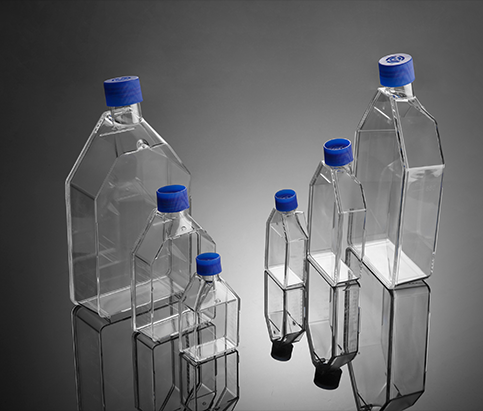
KIRGEN cell culture flasks are ergonomically designed for superior handling and minimal contamination.
The KIRGEN cell culture flask has a short, flat bevel design for easy access to samples. The overall design of the flask is stackable for maximum space efficiency. In addition, all flask models can be equipped with caps and filter caps, as well as pyrogen-free and DNase-free RNase, the following is the specific information on KIRGEN cell culture flasks.
| Product model | Product description | Packaging specifications |
|---|---|---|
| KG20025 | 25cm² flask PS, 40ml breathable cap, TC treatment, sterilization | 5pcs/pack, 200pcs/carton |
| KG20075 | 75cm² flask PS, 170ml breathable cap, TC treatment, sterilization | 5pcs/pack, 100pcs/carton |
| KG20175 | 175cm² flask PS, 450ml breathable cap, TC treatment, sterilization | 5pcs/pack, 40pcs/carton |


 备案号:沪ICP备20003873号-1