



Cell differentiation and fate determination are one of the mysteries of life and the core problems in the field of life sciences, and revealing its laws and mechanisms is of great significance for understanding life phenomena and promoting the development of medicine. However, it is not easy to accurately track the dynamic differentiation trajectory of cells, especially in the process of cell fate transition under disturbances such as diseases, which are relatively random and unpredictable. Currently, single-cell transcriptome sequencing (scRNA-seq) is a powerful technique for studying cell differentiation, which can be inferred by analyzing the transcriptome status of individual cells to infer the dynamic process of cell differentiation. In particular, RNA velocity model, developed based on the shear kinetics of messenger RNA (mRNA), can predict the state of single-cell transcriptome in "past" or "future" time, which is a classical method for single-cell trajectory inference and is widely used in single-cell data analysis. However, due to the limitations of single-cell sequencing technology in capturing intron regions and the high complexity of mRNA transcription/shear kinetics, RNA velocity models often suffer from inference errors or unrobustness in practical applications.
On July 31, 2023, Hu Zheng's research group from the Institute of Synthetic Biology, Shenzhen Institute of Advanced Technology, Chinese Academy of Sciences, and Zhou Da's research group, School of Mathematical Sciences, Xiamen University, published a report entitled PhyloVelo enhances transcriptomic velocity field mapping using monotonically expressed genes The research paper proposes a novel algorithmic framework for inferring single-cell differentiation trajectories, named PhyloVelo. This method combines single-cell transcriptome data and lineage tracing data to identify genes whose expression monotonically increases or decreases with cell division, that is, monotonically expressed genes, and uses molecular evolution methods to estimate the RNA velocity of monotonic genes and construct a single-cell RNA velocity field, so as to achieve high-precision prediction of cell differentiation trajectories.
The PhyloVelo algorithm replaces the branch length information of the single-cell phylogenetic tree with physical time to estimate the rate of change of gene transcription with the long period of branches. It is mainly divided into two parts. The first step is the identification of monotonically expressed genes (MEGs). Using single-cell transcriptome data and cell phylogeny information, the expression level of each gene at various time points on the phylogenetic tree was estimated by means of a diffusion process with drift and a zero-expansion negative binomial distribution (ZINB). Then, using the correlation between the expression level estimates and the corresponding phylogenetic tree time, those genes that increase or decrease linearly monotonically with lineage time, i.e., monotonically expressed genes MEGs (Figure 1). The second step is to estimate the rate of change in gene expression. This algorithm assumes that the rate of change of the expression level of each MEG over time is constant, that is, the drift coefficient in the diffusion equation is constant. By maximum likelihood estimation, the drift coefficient of each MEG can be obtained, thereby obtaining a vector of monotonic gene expression change rate per cell. Mapping this vector to a dimensionality-reducing space (tSNE, UMAP, etc.) to reconstruct the RNA velocity field allows inference of the transcriptome state of each cell in the past unit time (e.g., a cell division or mutation), i.e., counter-time reconstruction of cell differentiation trajectories (Figure 1).
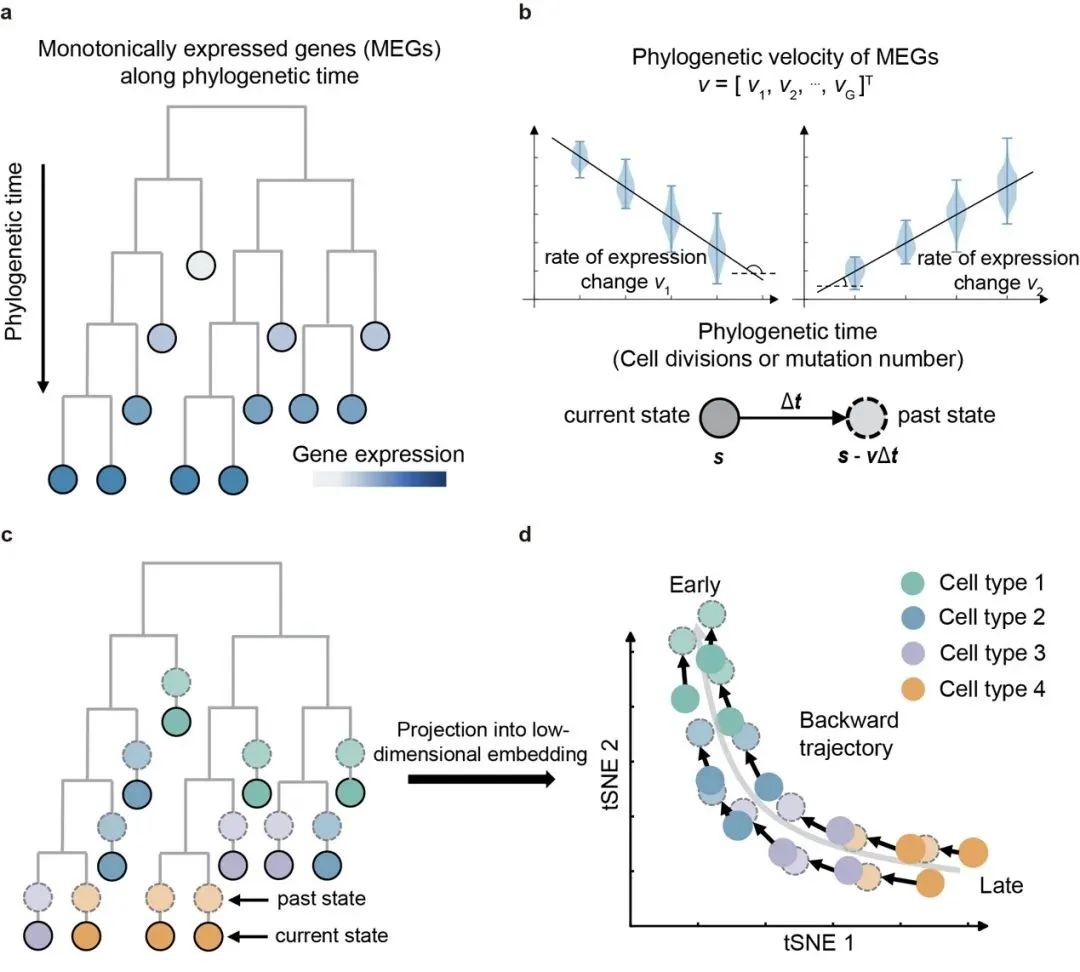
Figure 1: Schematic diagram of the PhyloVelo algorithm framework
The authors verify the accuracy and robustness of the PhyloVelo algorithm on a variety of simulation data and real data, and PhyloVelo can infer linear, bifurcation and convergence complex differentiation structures in simulation data with high accuracy, which are highly consistent with the real differentiation trajectory (Figure 2).
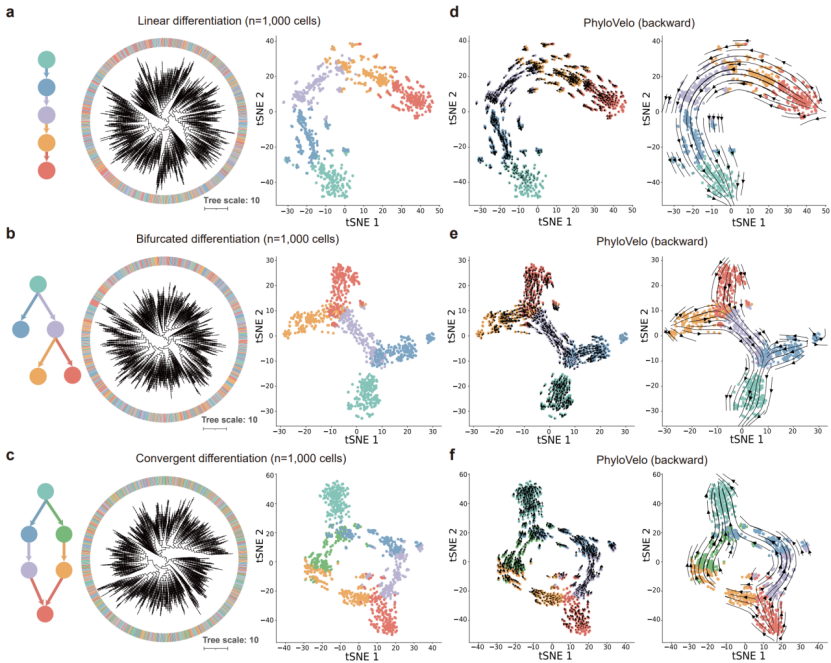
Figure 2: PhyloVelo accurately infers cell differentiation trajectories in simulation data
In addition, PhyloVelo also demonstrated superior performance over RNA velocity in early embryonic development of mice, accurately identifying blood/endothelial progenitor cells in the red blood cell series as the earliest cell type, and strongly correlated with cell proliferation capacity (Figure 3).
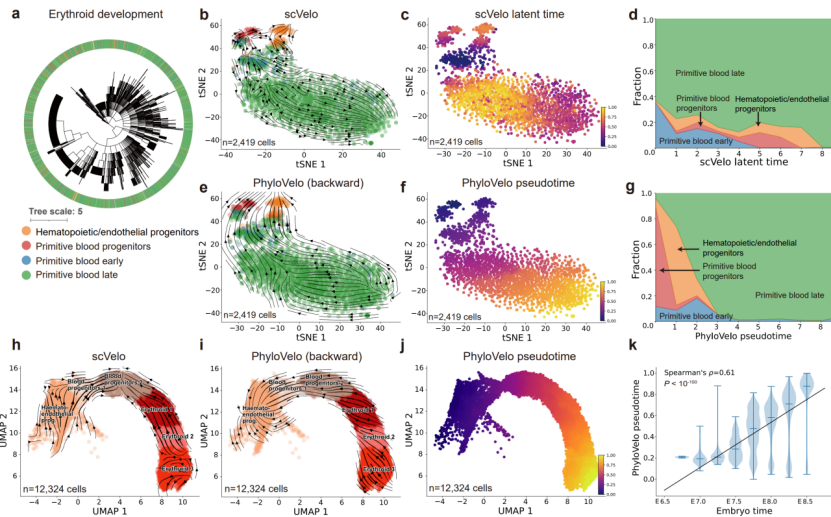
Figure 3: PhyloVelo reconstructs the developmental cell differentiation trajectories of mouse hematogeny
In addition to mouse embryonic development, PhyloVelo accurately resolves complex differentiation trajectories in other biological processes such as tumor evolution and immune cell dynamic development in mice and humans, and quantifies state transition probabilities between cell types. For example, in a lung cancer model, PhyloVelo revealed the reverse differentiation trajectories of cancer cells. In CD8+ T cells after anti-PD-1 treatment, PhyloVelo found that the source of activated CD8+ T cells changed significantly before and after immunotherapy, indicating a high degree of fate plasticity of T cells.
In conclusion, PhyloVelo is a novel method for reconstructing cell fate transitions using single-cell lineage and transcriptome data with high accuracy and robustness. PhyloVelo not only overcomes the limitations of traditional RNA velocity methods, but also discovers "clock genes" hidden in transcriptome data, providing clues to the molecular mechanisms of cell differentiation. PhyloVelo provides a powerful tool for studying biological development and disease progression, as well as a new perspective for future single-cell lineage and transcriptome data analysis.

Figure 4: Screenshot of the PhyloVelo user manual website
Hu Zheng, a researcher at the Institute of Synthetic Biology, Shenzhen Institute of Advanced Technology, Chinese Academy of Sciences, and Associate Professor Zhou Da, School of Mathematical Sciences, Xiamen University, are co-corresponding authors of the paper, and Wang Kun, a doctoral student at the Shenzhen Advanced Institute of the Chinese Academy of Sciences and Xiamen University, is the first author of the paper. Professor He Xionglei of Sun Yat-sen University, Professor Weiwei Zhai of the Institute of Zoology, Chinese Academy of Sciences, Professor Christina Curtis of Stanford University, and researcher of the Institute of Synthetic Biology of Shenzhen Advanced Institute provided valuable guidance and opinions on this research.
Original link: https://www.nature.com/articles/s41587-023-01887-5
Source: BioArt


 备案号:沪ICP备20003873号-1